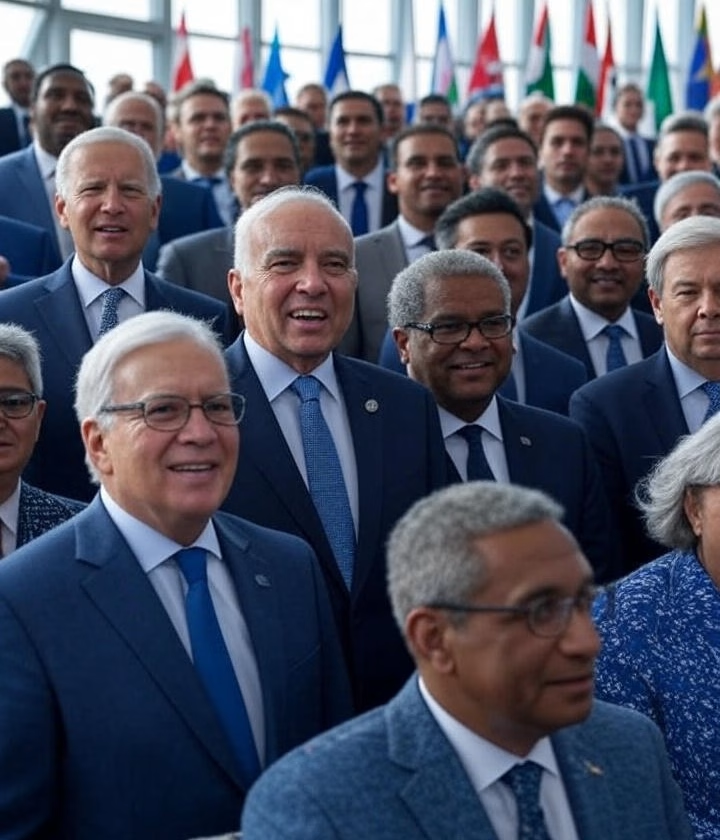
World leaders at UN rally for Palestinian statehood.
A Growing Global Support
The world is changing fast. More countries now back a Palestinian state. As of September 2025, 156 UN members recognize Palestine. That’s about 80% of all nations. This push comes amid the Israel-Palestine conflict. Leaders want peace. They see a two-state solution as key.
The number jumped recently. France led the way. It recognized Palestinian state on September 22. Belgium, Luxembourg, Malta, Monaco, and Andorra joined too. Before that, the UK, Canada, Australia, and Portugal stepped up on September 21. These moves shake things up. They challenge big powers like the US and Israel.
Palestinian state joined the UN as a non-member in 2012. Now, full membership talks grow. Support shows hope. But challenges remain. The road to statehood is long.
- France (Sept 22, 2025)
- Belgium (Sept 22, 2025)
- Luxembourg (Sept 22, 2025)
- Malta (Sept 22, 2025)
- Monaco (Sept 22, 2025)
- Andorra (Sept 22, 2025)
- UK (Sept 21, 2025)
- Canada (Sept 21, 2025)
- Australia (Sept 21, 2025)
- Portugal (Sept 21, 2025)
Who Recognizes Palestine?
Most support comes from Asia, Africa, and Latin America. Europe is split. The Middle East stands firm. Let’s break it down by region.
Africa Leads the Way
Africa has strong ties. 54 countries recognize Palestine. This is all but a few. South Africa is vocal. They support boycotts against Israel. Egypt and Algeria push hard too. African nations see the fight as justice.
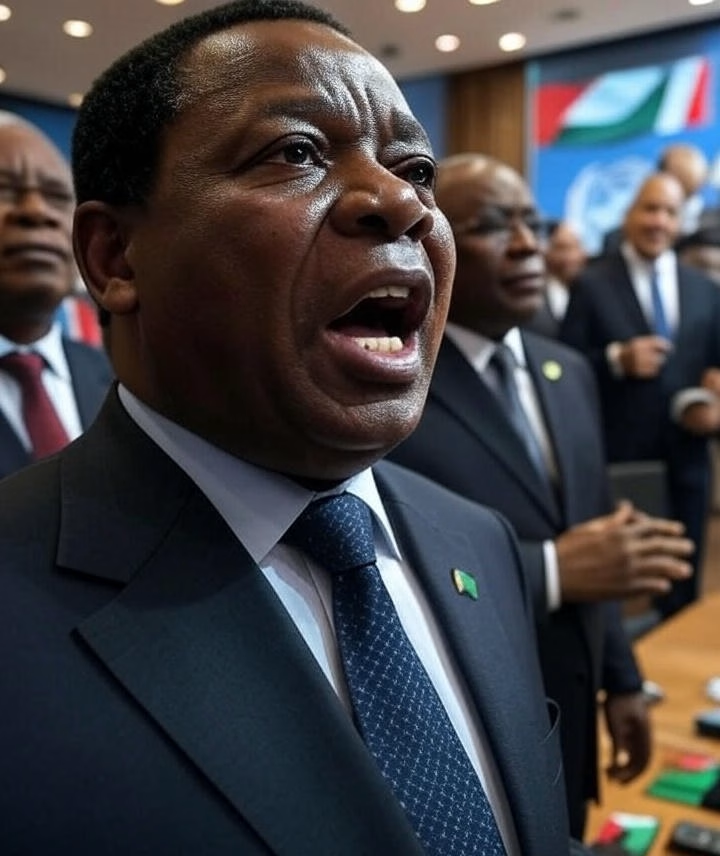
African nations rally for Palestine.
Asia’s United Front
Asia has 48 recognizers. China and India lead. They want peace. Saudi Arabia and Iran back it. Indonesia is the biggest supporter. They host big events. Asian voices are loud.
Latin America’s Solidarity
Latin America has 23 supporters. Brazil and Mexico are key. They see links to their struggles. Cuba and Venezuela speak out. The region pushes for UN action.
Europe’s Divided Views
Europe has 14 recognizers. Spain, Ireland, and Norway joined in 2024. France’s move is big. Germany and UK were slow. But pressure grows. More could follow.
Africa (54): Algeria, Angola, Benin, Botswana, Burkina Faso, Burundi, Cameroon, Cape Verde, Central African Republic, Chad, Comoros, Congo, Democratic Republic of Congo, Djibouti, Egypt, Equatorial Guinea, Eritrea, Ethiopia, Gabon, Gambia, Ghana, Guinea, Guinea-Bissau, Kenya, Lesotho, Liberia, Libya, Madagascar, Malawi, Mali, Mauritania, Mauritius, Morocco, Mozambique, Namibia, Niger, Nigeria, Rwanda, São Tomé and Príncipe, Senegal, Seychelles, Sierra Leone, Somalia, South Africa, South Sudan, Sudan, Tanzania, Togo, Tunisia, Uganda, Zambia, Zimbabwe.
Asia (48): Afghanistan, Bangladesh, Bhutan, Brunei, Cambodia, China, East Timor, India, Indonesia, Iran, Iraq, Japan, Jordan, Kuwait, Kyrgyzstan, Laos, Lebanon, Malaysia, Maldives, Mongolia, Myanmar, Nepal, North Korea, Oman, Pakistan, Palestine (self), Philippines, Qatar, Saudi Arabia, Singapore, South Korea, Sri Lanka, Syria, Tajikistan, Thailand, Turkey, Turkmenistan, United Arab Emirates, Uzbekistan, Vietnam, Yemen.
Latin America (23): Antigua and Barbuda, Argentina, Bahamas, Barbados, Belize, Bolivia, Brazil, Chile, Colombia, Costa Rica, Cuba, Dominica, Dominican Republic, Ecuador, El Salvador, Grenada, Guatemala, Guyana, Honduras, Jamaica, Mexico, Nicaragua, Panama, Peru, Saint Kitts and Nevis, Saint Lucia, Saint Vincent and the Grenadines, Suriname, Trinidad and Tobago, Uruguay, Venezuela.
Europe (14): Albania, Bosnia and Herzegovina, Bulgaria, Cyprus, Czech Republic, France, Hungary, Iceland, Ireland, Malta, Montenegro, North Macedonia, Norway, Poland, Romania, Russia, Serbia, Slovakia, Slovenia, Spain, Sweden, Switzerland, Ukraine, United Kingdom.
Middle East (non-Asia, 2): Bahrain, Palestine.
Oceania (3): Australia, New Zealand, Papua New Guinea.
Reasons for Support Palestinian
Many reasons drive this. Human rights top the list. The conflict kills civilians. Gaza suffers most. Nations want an end. They see Palestine as equal.
History plays a role. Colonial pasts shape views. Africa and Asia know struggle. They back self-rule. Religion matters too. Muslim countries lead.
Politics push some. Alliances form. China uses it against the West. Russia too. The US stands alone. It blocks UN bids. This frustrates others.
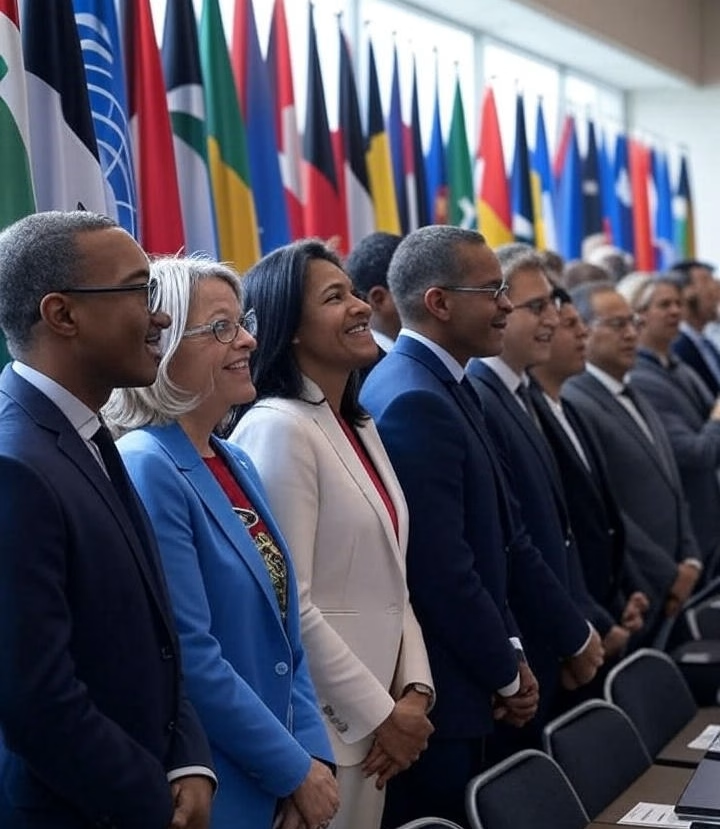
Flags of supporting nations wave together.
Challenges to Statehood
Support is wide. But hurdles remain. Israel opposes. It builds settlements. The US vetoes UN votes. Palestine needs borders. Jerusalem is disputed.
Hamas and Fatah split. Unity is hard. Aid flows in. But it’s not enough. Rebuilding Gaza takes billions. The war goes on. Peace seems far.
- Israeli settlements
- US vetoes
- Internal divisions
- Border disputes
UN Vote History
The UN has voted often. In 2012, 138 said yes to non-member status. The US and Israel said no. In 2024, 143 backed full membership. Again, US veto.
Recent votes show shift. More Europeans join. The General Assembly pushes. Security Council blocks. Pressure builds. Change could come.

UN General Assembly votes for Palestine.
Future Implications
If Palestine wins statehood, peace follows. Borders form. Aid increases. Trade grows. The region stabilizes. But Israel must agree. Talks are needed.
The world watches. More recognitions could tip scales. The US might shift. Elections change things. Hope rises. The dream lives on.
Statehood could end occupation. Economy booms. Peace deals signed.
Public Voices
People speak out. Protests fill streets. Social media trends. #FreePalestine grows. Youth lead the call. They want justice now.
Celebrities join. Artists draw maps. Songs play. Awareness spreads. The movement is strong. Change feels close.
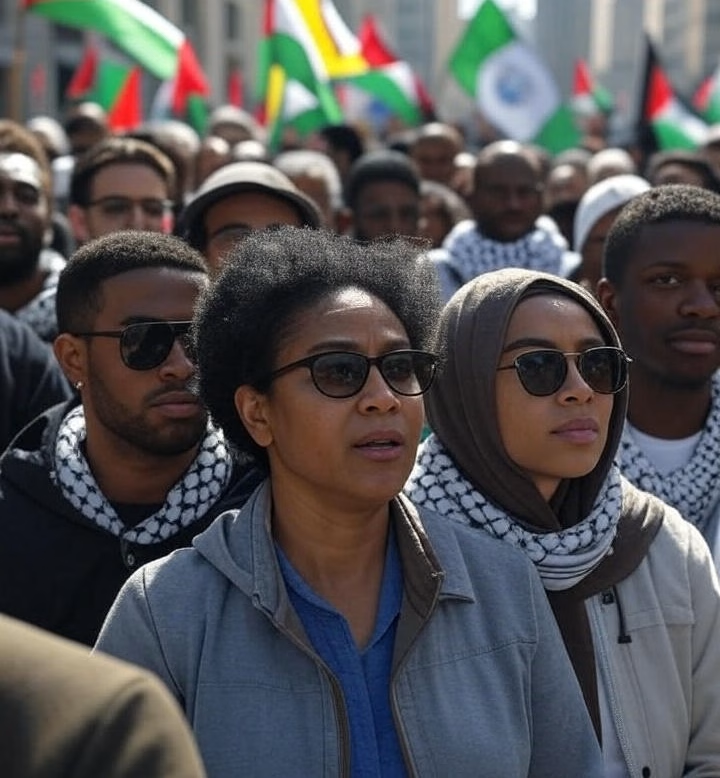
Global protests demand statehood.
Call to Learn More
This story matters. Read on. Share facts. Support peace. The world needs it. Palestine deserves a home.
Follow updates. The news changes fast. Your voice counts. Join the push.
- UN Palestine page
- Shark Trust site
- Amnesty International