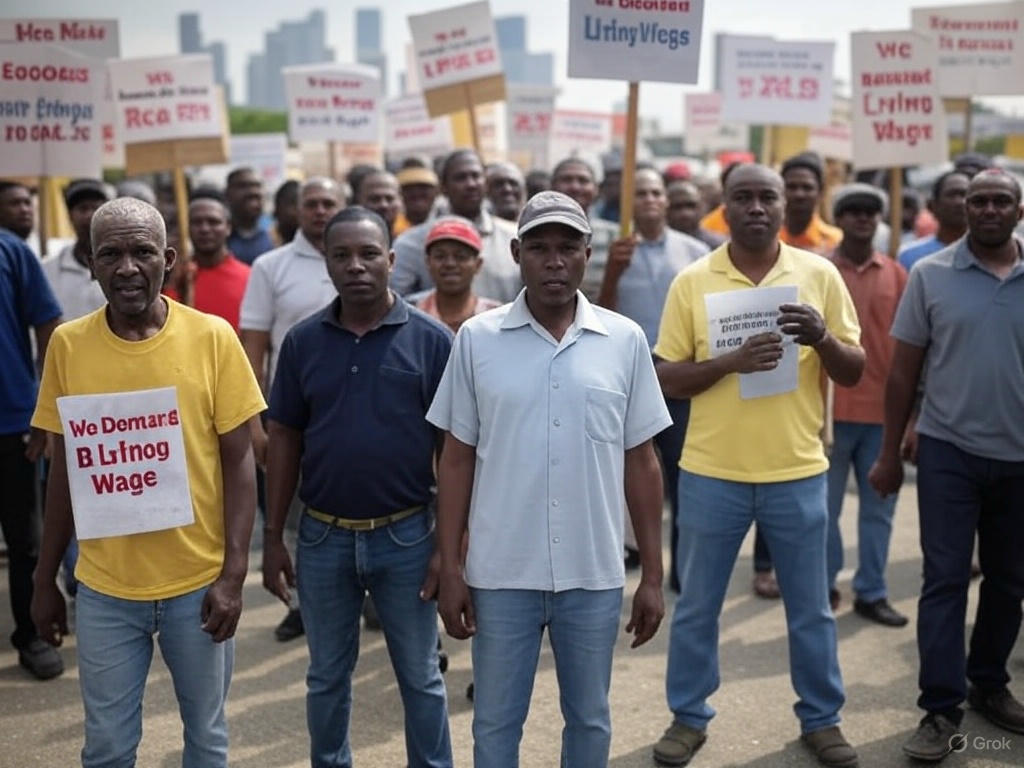
As of May 1, 2025, Nigerian workers are voicing their frustration over the ₦70,000 minimum wage, which they say is insufficient to cope with the escalating cost-of-living crisis. With inflation soaring at 24.23% and basic necessities like a bag of rice costing ₦85,000—exceeding the monthly minimum wage—many are struggling to afford essentials such as food, rent, school fees, and healthcare.
A Harsh Reality: Workers report that the ₦70,000 minimum wage, even when fully implemented, disappears quickly due to rising costs of transportation, fuel (now at ₦950/litre), electricity tariffs, and other daily expenses.
The Nigeria Labour Congress (NLC) has called out some state governors for failing to implement the new wage, exacerbating the financial strain on workers. Protests have erupted, with unions in the Federal Capital Territory recently taking to the streets over unpaid salaries and stalled wage adjustments, accusing authorities of broken promises.
Nigerian Workers Are Also Frustrated
By heavy tax deductions on their wages and the lack of consequential adjustments to match inflation. The economic hardship has left many families unable to meet basic needs, prompting calls for urgent government intervention to address productivity, boost household consumption, and provide relief measures.
As the cost-of-living crisis deepens, Nigerian workers are demanding more than just promises—they want action to ensure a living wage that truly supports their livelihoods.
For more updates and analysis, visit our
LJ News
WhatsApp
Facebook
Telegram